
Brief Summary
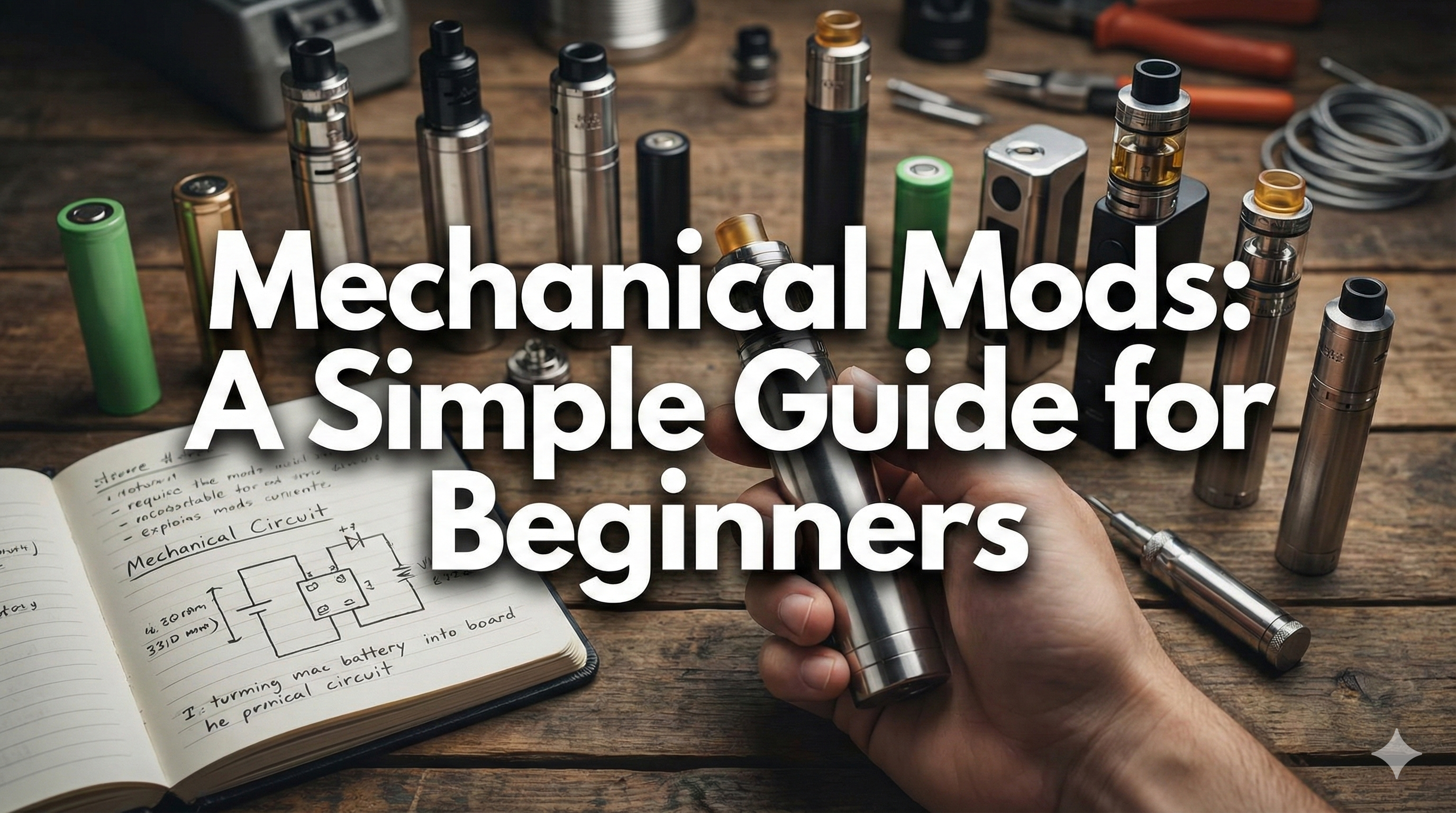
Mechanical mods are the most direct and “raw” style of vaping device.
They deliver battery power straight to the coil with no chipset, no screen, and no automatic safety protections.
That simplicity is exactly why mechanical mods have a loyal fan base.
Cloud chasers and hobbyists love the instant firing, durable metal construction, and hands-on control.
But that same simplicity is also why beginners must slow down and learn the fundamentals first.
A regulated mod can warn you if something is wrong. A mechanical mod usually cannot.
This mechanical mod vape guide is written for beginners who are curious, as well as hobbyists who want a clear refresher on the essentials. We will cover what are mechanical mods, how do mechanical mods work, why use mechanical mods, and how to use mechanical mods safely. You will also learn what to know about mechanical mods before building a coil or choosing a battery.
If you plan to order vapes online, it is especially important to choose a trusted store that carries authentic batteries, quality atomizers, and the safety accessories that mechanical users actually need.
Table of Contents
-
What Are Mechanical Mods?
-
How Do Mechanical Mods Work?
-
Why Use Mechanical Mods?
-
How to Use Mechanical Mods Safely
-
Conclusion
-
FAQs
-
Key Takeaways
What Are Mechanical Mods?
Mechanical mods are unregulated vape devices that send raw battery power directly to the coil.
There is no electronic regulation controlling wattage, voltage, or temperature.
So, what are mechanical mods in plain language?
They are basically a metal body that holds a battery and connects it to an atomizer when you press the fire button.
That’s why you’ll often hear people describe them as “simple machines.”
They rely on direct electrical contact, not software.
Mechanical mods explained vs regulated devices
A regulated mod has a chipset.
It can limit power, prevent shorts, and display warnings.
A mechanical mod does not.
If your build is unsafe, a mech will still try to fire.
If you’re still comparing device types, this regulated vs unregulated mods guide helps clarify the key differences:
Basic components of a mechanical mod
Even though mech devices are “simple,” each component plays a critical role.
Tube or Box Body
This is the metal housing that holds the battery and forms the conductive path.
Battery
A high-drain lithium-ion battery (commonly 18650, 20700, or 21700) supplies power.
Atomizer / Coil
An atomizer (often an RDA for mech users) contains the coil and cotton wick.
Fire Button / Switch
The switch completes the circuit. When pressed, current flows from battery to coil.
Simple component diagram
Who mechanical mods are for
Mechanical mods are often chosen by:
-
Hobbyists who enjoy building coils
-
Cloud chasers who want dense vapor
-
Users who like minimal electronics
-
People who want durable, metal-built devices
But mechanical mods for beginners only make sense if the beginner is committed to learning safety first.
If you want easy, regulated mods are the better starting point.
How Do Mechanical Mods Work?
Let’s answer the big question: how do mechanical mods work?
A mechanical mod fires using direct battery voltage.
There is no chipset to regulate output.
That means the power depends on two things:
-
Battery voltage (starts ~4.2V fully charged)
-
Coil resistance (measured in ohms, Ω)
Step-by-step operation
-
Battery supplies direct power
The battery holds energy as voltage. -
You press the fire button
The switch makes contact and completes the circuit. -
Current flows to the coil
Electricity travels through the coil wire or mesh. -
Coil heats up
The coil converts electricity into heat. -
E-liquid vaporizes
Cotton saturated with e-liquid turns vapor when heated.
“No circuitry” explained
In regulated mods, the chipset acts like a control center.
It measures resistance, limits output, and cuts off if something is wrong.
In mechanical mods, none of that exists.
Your build and battery determine everything.
Battery drain behavior (important!)
A mech hits strongest when the battery is freshly charged.
As voltage drops, the vape becomes weaker.
This “voltage sag” is normal.
Beginner mental model:
This is one reason some users love mechs — the feel is natural and direct.
It’s also why safety calculations must assume the maximum voltage (4.2V).
Why Use Mechanical Mods?
So, why use mechanical mods when regulated devices are safer and easier?
For many vapers, it comes down to experience and preference.
Benefits of mechanical mods
Direct power delivery
Mechs feel immediate. There is no perceived firing lag.
Simplicity
Fewer electronic components means fewer software failures.
Durability
Many mech mods are built from brass, copper, or stainless steel and can last a long time.
High vapor potential
When paired with a properly built low-resistance coil, vapor can be dense and warm.
Hands-on control
Some users enjoy building, tuning airflow, and dialing in wicks.
Drawbacks and risks
No safety protections
If you short the coil, the mod can still fire.
Battery stress is real
An unsafe build can pull too many amps.
Steep learning curve
You must understand Ohm’s Law, battery ratings, and build safety.
Not forgiving
Mistakes that a regulated mod would block can become dangerous on a mech.
If you’re a beginner, ask yourself honestly:
Do you want to learn the engineering side of vaping, or do you just want a device that works?
How to Use Mechanical Mods Safely
This is the most important part of the entire mechanical mod vape guide.
If you only read one section, read this one.
1) Battery safety comes first
Mechanical mods should only be used with authentic high-drain batteries from reputable sources.
Avoid unknown batteries, rewraps with unclear specs, or questionable online listings.
Key battery rules:
-
Never use torn wraps
-
Never carry loose batteries in your pocket
-
Use a battery case
-
Don’t expose batteries to extreme heat
-
Replace damaged cells immediately
2) Ohm’s Law basics (non-negotiable)
Ohm’s Law helps you calculate how hard your build will pull from the battery.
Formula:
Assume 4.2V (fully charged).
Example A: 0.20Ω coil
4.2 ÷ 0.20 = 21A
Example B: 0.10Ω coil
4.2 ÷ 0.10 = 42A (very high, unsafe for most batteries)
This is why “lower resistance” is not automatically better.
It can exceed safe battery limits quickly.
3) Check coil resistance every time
Before you fire:
-
Measure the build on an ohm reader
-
Or use a regulated mod to confirm resistance
You’re checking for:
-
Accurate resistance
-
No short circuits
-
Stable connections
Never guess.
4) Avoid shorts and hot spots
Common short causes include:
-
Coil legs touching the deck incorrectly
-
Loose post screws
-
Damaged atomizer insulators
-
Improperly trimmed leads
If you’re building coils, pulse and tune them on a regulated mod first (at low power).
A mech is not the place to “test and adjust.”
5) Know the signs of danger
Stop immediately if you notice:
-
Mod gets hot fast
-
Battery becomes hot
-
Strange smell
-
Button sticking
-
Arcing or sparking at contacts
-
Sudden performance change that feels abnormal
Heat is a warning sign.
Mechanical mods should not heat up quickly in normal use.
6) Proper storage and handling
-
Lock the button if your mod has a lock
-
Remove the battery for long-term storage
-
Keep contacts clean (dirty contacts create resistance and heat)
-
Store devices upright when possible to reduce leaking
Quick safety checklist diagram
Conclusion
Mechanical mods can deliver powerful, satisfying performance in the hands of an educated user.
They are durable, direct, and highly customizable.
But mechanical mods are not plug-and-play devices.
They require knowledge of batteries, coil resistance, and safe handling.
If you want a broader overview of mod types, settings, and safer beginner paths, read our complete pillar vape mod guide.
FAQs
Are mechanical mods safe for beginners?
Mechanical mods are not recommended for beginners unless they are committed to learning battery safety, Ohm’s Law, and safe building practices. A regulated device is usually the safer first step.
Can I use any battery with a mech mod?
No. Only authentic, high-drain batteries with verified continuous discharge ratings should be used. Never use damaged wraps or unknown battery brands.
What is the difference between mechanical and regulated mods?
Regulated mods use a chipset to control output and provide protections. Mechanical mods deliver direct battery power with no electronic protections.
Why do some vapers prefer mechanical mods?
Some vapers prefer the direct feel, durability, and hands-on customization. Mechanical mods also appeal to hobbyists who enjoy building coils and tuning performance.
Key Takeaways
-
Mechanical mods are unregulated devices that fire using direct battery voltage.
-
They have no chipset, screen, or safety protections.
-
Understanding battery safety and Ohm’s Law is mandatory.
-
Always measure resistance and check for shorts before firing.
-
Mechanical mods are best for educated hobbyists, not casual beginners.


